
Blog
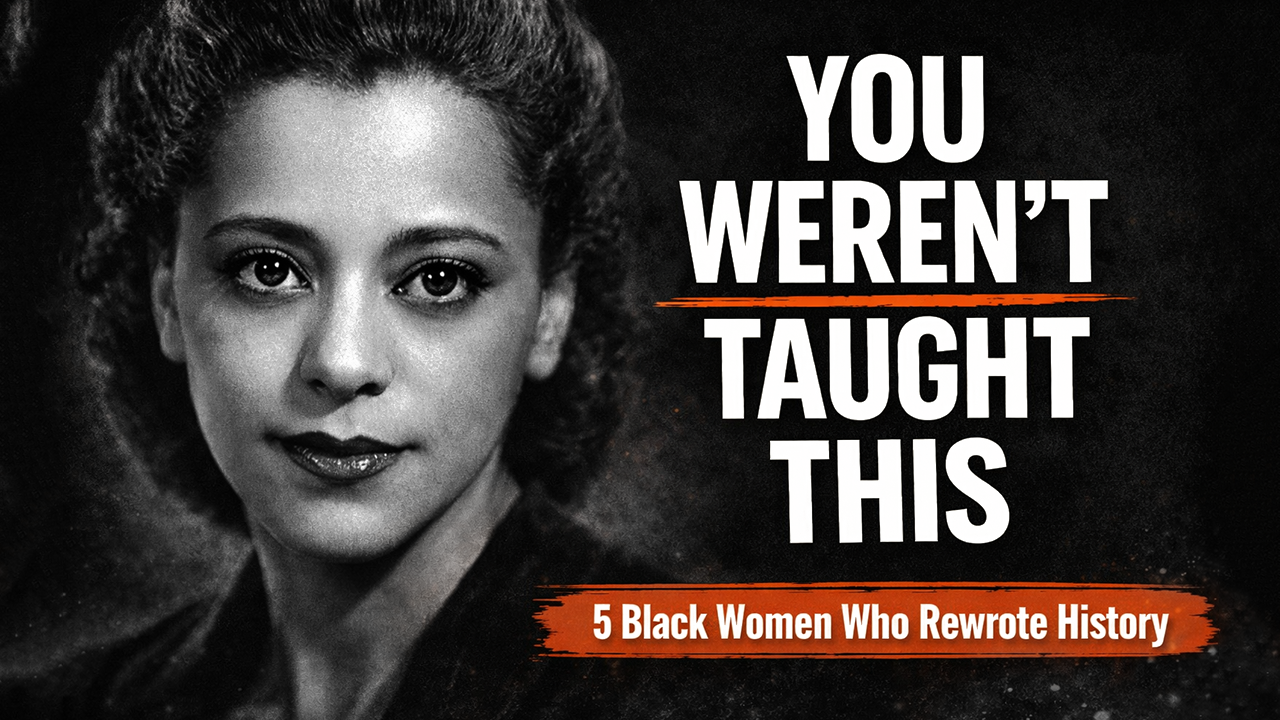
5 Black Women Who Rewrote History and Why Their Stories Were Overlooked
A more important question is this. Why do some contributions become widely known while others remain overlooked?
History is not just a record of what happened. It is also a reflection of what was preserved, what was taught, and what was repeated.
This presentation examines five Black women whose work influenced civil rights, science, engineering, entrepreneurship, and public policy. Yet their names are often absent from mainstream historical narratives.
Viola Desmond challenged racial segregation in a Canadian theater in 1946, nearly a decade before the more widely recognized protests of the 1950s. Her story shows that civil rights resistance was not limited by geography or timing.
Annie Easley worked at NASA as a human computer and later as a programmer contributing to rocket systems. Her work highlights the technical foundation behind space exploration, which is often overlooked.
Alice H. Parker secured a U.S. patent in 1919 during a time when access to systems like that was limited. Her story raises broader questions about intellectual ownership and recognition.
Eliza Carpenter was born into slavery and later became a horse owner, trainer, and jockey during the Reconstruction era. Her presence in elite racing circles reflects a level of economic agency that is rarely emphasized.
Dr. Charlene Drew Jarvis moved from neuroscience into public leadership, serving for two decades on the Council of the District of Columbia. Her career shows what happens when scientific thinking enters policy and governance.
Together, these stories point to a larger pattern.
These women were not simply participants in history. They contributed to systems that shaped modern life. Yet their work was often categorized as secondary or local instead of central.
When contributions are consistently overlooked, our understanding of history becomes incomplete.
At Historians Connect, the goal is not just to tell stories. It is to examine how history is constructed and to restore a more complete record of those who shaped it.
Watch the full presentation below to explore these stories in greater depth.
African Cultural Symbols: Meaning, Authority, and Systems of Governance
African cultural symbols were never merely decorative.
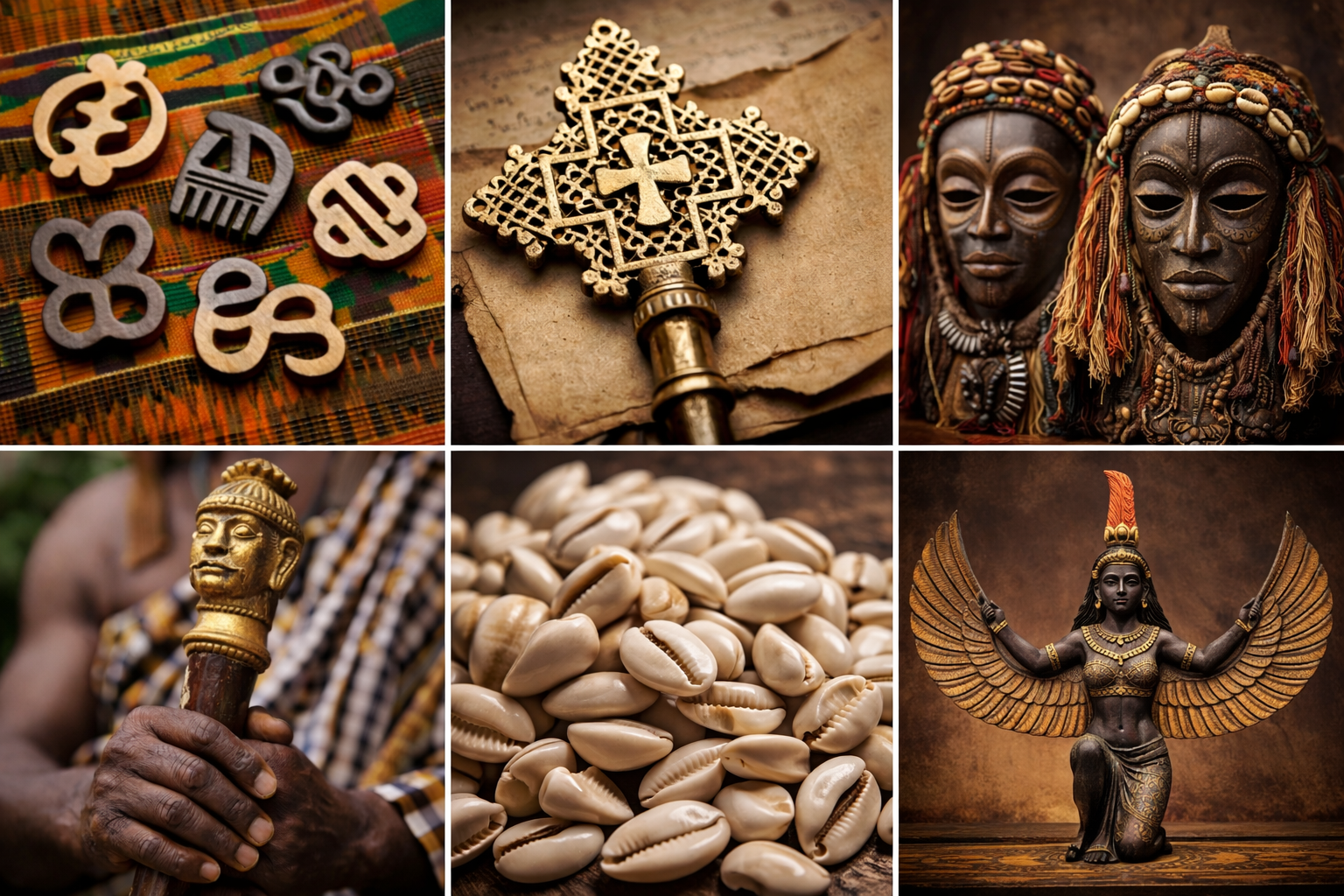
Across the continent, symbols encoded law, ethics, governance, economic systems, and identity. They functioned as structured communication — visible systems that reinforced authority and communal responsibility.
Understanding African cultural symbols means moving beyond aesthetics and into function
Adinkra Symbols (Ghana)
Adinkra symbols from Ghana represent ideas, values, and concepts — each tied to a proverb.
They communicate wisdom, unity, endurance, and moral responsibility. Wearing Adinkra was not aesthetic expression but a declaration of values. These symbols made ethics visible within society and reinforced shared expectations.
Ethiopian Coptic Cross (Ethiopia)
The Ethiopian Coptic Cross symbolizes power, unity, and spiritual authority.
Its intricate design reflects continuity and balance. Beyond religion, it represents cultural survival and identity preserved despite invasion and political pressure.
The Staff (Various African Societies)
The staff symbolizes political power, strength, clan authority, and leadership.
To carry the staff meant responsibility. Authority was recognized instantly and regulated collectively rather than imposed through force.
Ceremonial Masks (Various Regions of Africa)
African ceremonial masks symbolize authority, spiritual presence, law, and social order.
When a mask appeared, governance was present. The wearer embodied communal power rather than personal identity.
Cowrie Shells (Pan-African Trade Networks)
Cowrie shells symbolized wealth, fertility, and money. They functioned as currency across African trade systems, representing structured economic exchange rather than ornament.
Ma’at (Kemet / Ancient Egypt)
Ma’at symbolizes truth, balance, justice, and righteousness.
It served as the moral standard by which rulers were judged. In ancient African governance, power was conditional upon maintaining balance and justice.
African cultural symbols reveal that governance, ethics, economy, and identity were embedded directly into visible systems.
Symbols were not secondary to institutions.
They were institutions.
Understanding these systems reshapes how we interpret African civilization — not as decorative tradition, but as structured, intentional governance
Learn More
To explore deeper breakdowns of these symbols and other overlooked history, visit our YouTube channel.
Discover how African civilizations encoded power, ethics, and identity into systems that still shape the world today.
https://youtube.com/@historiansconnect760?si=ZsmG9MutDTTy_K7M
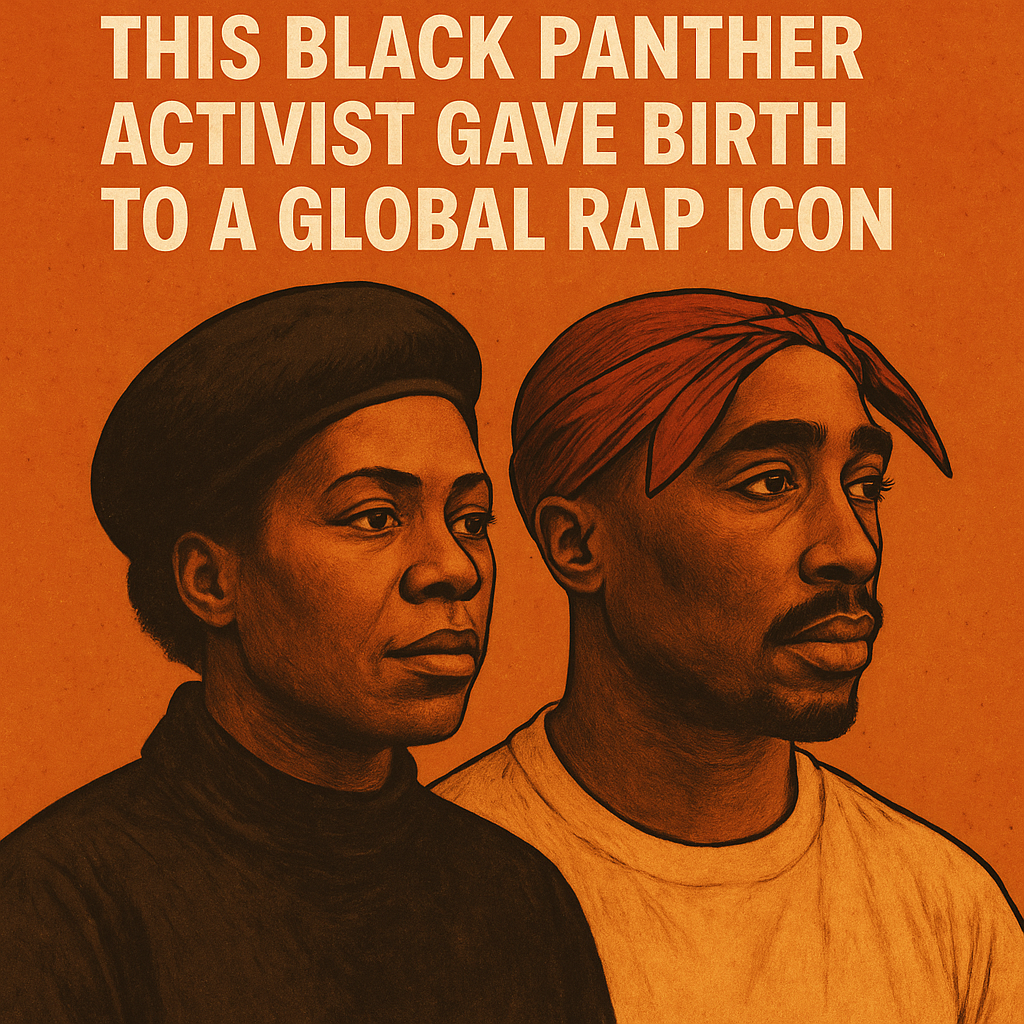
This Black Panther Activist Gave Birth to a Global Rap Icon
I am not saying, I'm going change the world, but I guarantee that I will spark the brain that will change the world.

Black Wall Street: The Day Black Generational Wealth Was Destroyed
What if the most prosperous Black community in America was wiped out overnight—and no one was held accountable?

10 Lessons from Malcolm X That Still Matter Today
More than fifty years after his assassination, Malcolm X remains one of the most powerful and misunderstood figures in Black history. His evolution—from a street hustler to a global human rights advocate—was not just a personal transformation. It was a blueprint for how to live, lead, and liberate. Here are 10 lessons from Malcolm X’s life that still speak to the challenges and possibilities we face today.
Uncovering Harvard’s Dark Legacy: The Untold Story of Enslavement and Exploitation
Africatown: A Legacy of Resilience and Environmental Injustice
Honoring the Legacy of Dr. Ivan Van Sertima: A Tribute to a Visionary Scholar
Unveiling the Legacy of Cheik Anta Diop: Architect of African Civilization
" Historic awareness is the cement which brings a people together."

Black Indians: A Hidden Heritage
"If you know that I have a history, you will respect me."~Black Indian Student
Unveiling African History: A Journey through African Glory
"The thesis that Africa is what Western European missionaries, traders, technicians and administrators have made it is comforting to Western Europeans, but invalid. "
African American History Standards
The beneficiaries of slavery were those in power, not the ones who suffered under its weight.
Outstanding Black Women in Engineering: Spotlight on Yvonne Clark
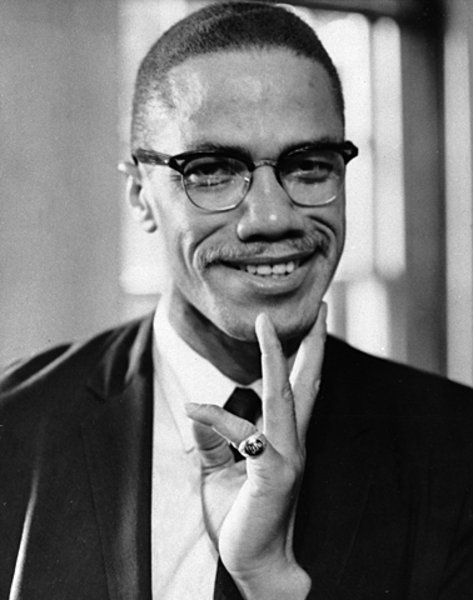
The Diary of Malcolm X
There is no greater serenity of mind than when one can shut the hectic noise and pace of the materialistic outside world, & seek inner peace within oneself.~Malcolm X
Sustainability & Climate Change in Africa
Sustainability consists of fulfilling the needs of current generations without compromising the needs of future generations, while ensuring a balance between economic growth, environmental care and social well-being.
They Came Before Columbus: The Mandingo Traders of Medieval Mexico
A Different Black History
To attempt a presentation of Negro history , or indeed of African/and or black history, in so small a volume is to undertake an impossible task, yet it is a task that must be attempted. J.C. DeGraft-Johnson

